
Periodontology
Periodontitis is a sneaky chronic disease that causes loss of the tissues (bone and gum) surrounding the tooth.

The most common symptoms are loose teeth, receding and bleeding gums, and teeth drifting out of position, until the tooth is lost.
Gum bleeding during brushing is often underestimated: a healthy gum does not bleed. Bleeding is always a sign of a periodontal problem (gingivitis or periodontitis) and tells us that periodontal disease is not under control.
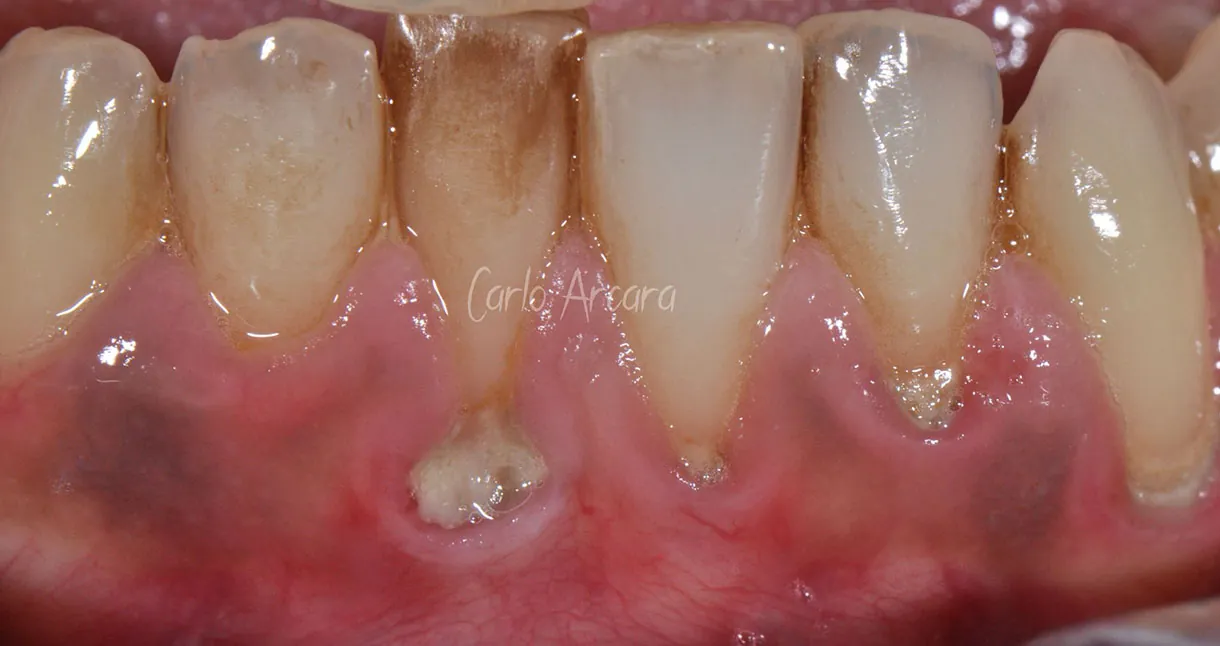
Why you should be examined
The absence of bleeding is not always reliable: it does not rule out periodontitis. In smokers, for example, the gums may not bleed even when there are large active periodontal pockets. Pain is not always present either: often there is only a feeling of discomfort in the gums.
For all these reasons a periodontal check-up is always advisable, especially if parents or grandparents have lost teeth because they became loose, that is, because of periodontitis. Periodontitis is always caused by plaque or tartar below the gum line, but the types of bacteria that make them up are, to some extent, inherited.
A periodontal check-up helps preserve the life and health of your teeth, and also avoids possible serious systemic problems: scientific literature links uncontrolled periodontitis with conditions such as atherosclerosis, heart attack and stroke.
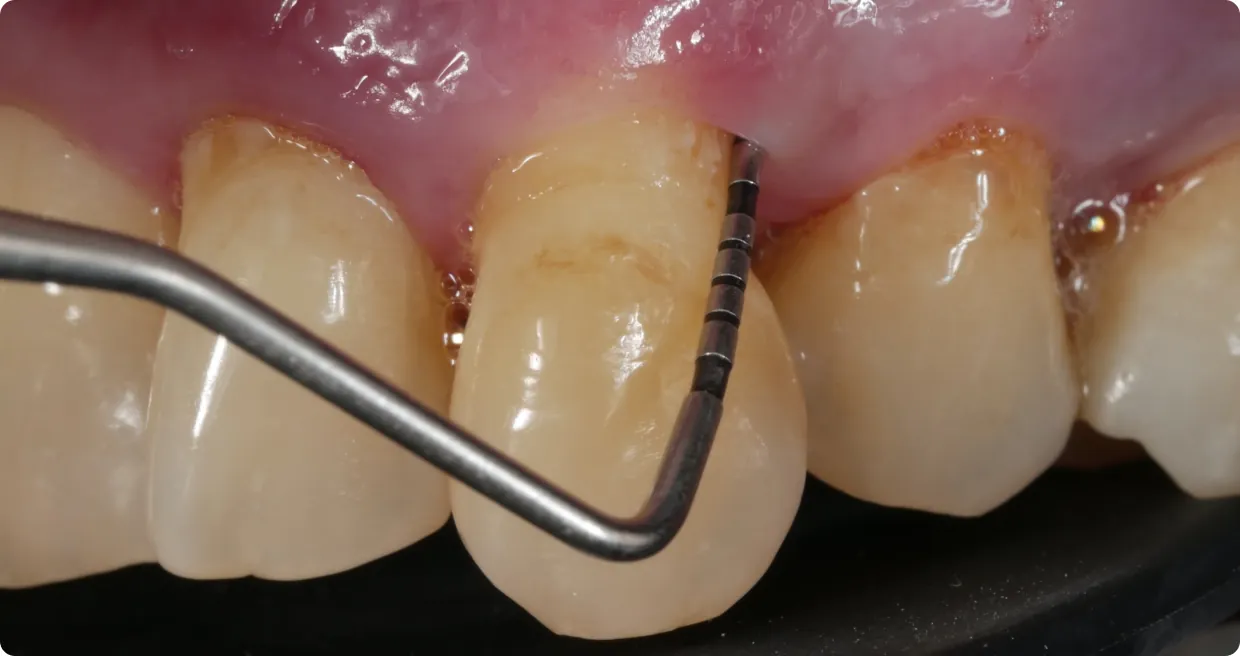
It can be kept under control
Today the progression of periodontitis can be controlled, and therefore halted. It takes a trained, scrupulous periodontist, who removes as much tartar and as many bacteria under the gum as possible. It also takes commitment from the patient, who must clean their teeth very carefully 4 times a day, using accessory tools as well.
Periodontitis often leaves aesthetic damage, which can be addressed only once the health of teeth and gums has been achieved, with aesthetic treatments such as veneers.
Let’s talk in person
Every case is different. A visit lets us tell you which path is right for you.